Phone:
(701)814-6992
Physical address:
6296 Donnelly Plaza
Ratkeville, Bahamas.

Phone:
(701)814-6992
Physical address:
6296 Donnelly Plaza
Ratkeville, Bahamas.
Meta Description: Discover how yoga for sports fitness enhances athletic performance, prevents injuries, and builds mental toughness. Learn the best poses and routines for every athlete.
For a long time, the worlds of “iron-pumping” athletics and “zen-seeking” yoga were kept in separate corners of the gym. Athletes focused on power and speed, while yogis focused on flexibility and mindfulness. But today, the world’s most elite competitors—from NBA stars to Olympic sprinters—have bridged the gap.
Integrating yoga for sports fitness isn’t just about touching your toes; it’s about fine-tuning your body’s engine for maximum efficiency.
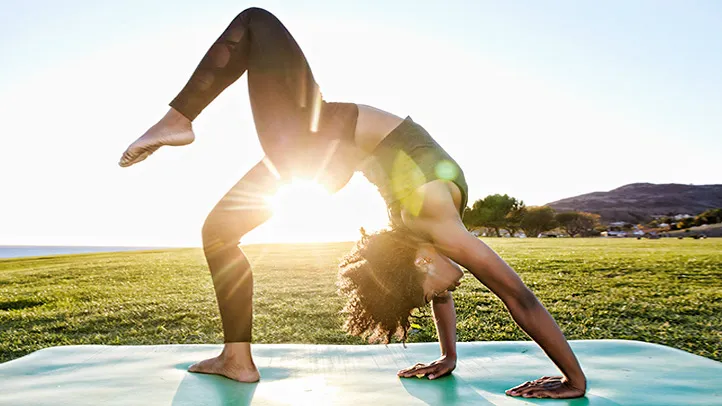
Traditional sports training is often repetitive. Runners move in a straight line; golfers swing in one direction; cyclists remain hunched over handlebars. This creates muscular imbalances, tightness, and eventually, injury.
Yoga acts as the “reset button.” It moves the body through all planes of motion, ensuring that no muscle group is overworked while others remain dormant.
Integrating yoga for sports fitness into a modern athletic regimen is no longer a niche choice; it is a strategic necessity for peak performance. While traditional strength and conditioning focus on power, speed, and endurance, they often lead to repetitive strain and muscular imbalances. Yoga acts as the ultimate “system reset,” addressing the overlooked components of athleticism: functional mobility, joint stability, and neurological recovery. By moving the body through multi-planar sequences, athletes can unlock a greater range of motion, allowing for longer strides in runners, deeper squats in lifters, and more explosive lateral movements in court athletes.
The benefits of yoga for sports fitness extend far beyond simple stretching. It serves as a sophisticated form of “prehab,” strengthening the small stabilizer muscles around the knees, hips, and ankles that are often the first to fail during high-impact play. Furthermore, the emphasis on core integration ensures that power is transferred efficiently from the ground up through the kinetic chain. Beyond the physical, the “breathwork” or pranayama aspect of yoga trains the nervous system to remain calm under pressure. By mastering diaphragmatic breathing, an athlete can lower their heart rate during high-stress moments—like a crucial free throw or the final mile of a marathon—maintaining cognitive clarity when fatigue sets in.
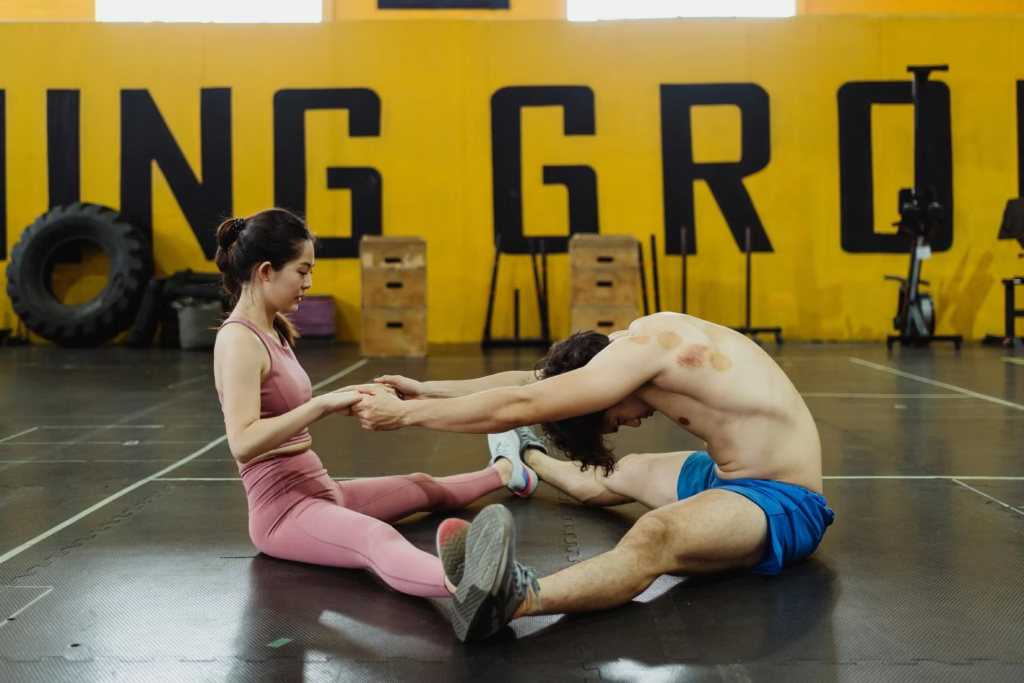
Ultimately, adding yoga for sports fitness to your routine provides the essential “yang” to the “yin” of intense training. It facilitates faster recovery by stimulating blood flow and lymphatic drainage, helping to flush out metabolic waste after a grueling session. Whether you are a professional athlete or a weekend warrior, yoga provides the structural integrity and mental toughness required to stay in the game longer and perform at a higher level. It isn’t just about being flexible; it’s about becoming a more durable, balanced, and focused version of yourself.
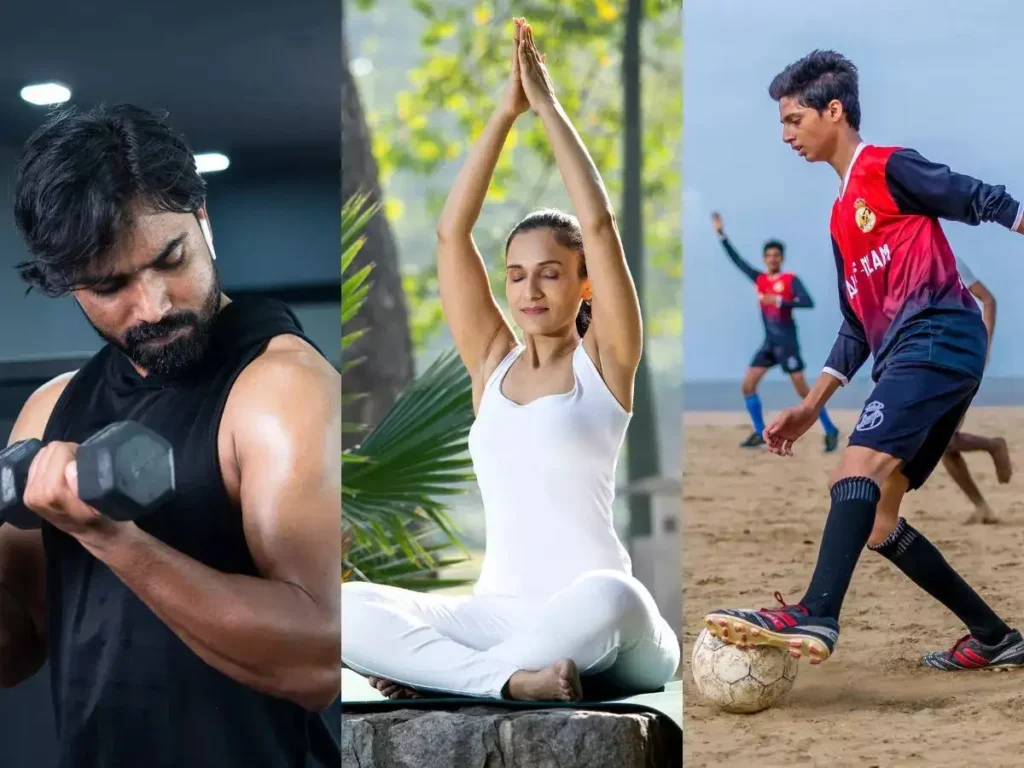
Strength without mobility is like a powerful car with a stiff steering wheel. Yoga for sports fitness targets the deep connective tissues and fascia, allowing your joints to move through their full range. This translates to a longer stride for runners and a more explosive jump for basketball players.
Most sports injuries occur because a muscle is too tight to handle a sudden impact or stretch. Yoga builds “functional” flexibility. By strengthening the stabilizing muscles around the knees, hips, and ankles, you create a natural suit of armor against sprains and tears.
In almost every sport, power is generated from the core. Yoga poses like Plank, Boat Pose, and Warrior III force you to engage your deep abdominals and obliques. Improved balance means better body control when you’re knocked off-center during a game.
The “breathwork” (Pranayama) in yoga is a legal performance enhancer. By learning to control your breath, you can lower your heart rate during high-stress moments—like standing at the free-throw line or waiting for the starting gun. Yoga teaches you to remain calm when your muscles are burning.
To get started with yoga for sports fitness, focus on these “big hitters”:
You don’t need to spend 90 minutes on a mat every day.
Incorporating yoga for sports fitness is no longer a “luxury” for athletes—it’s a necessity. It provides the balance to your intensity, the flexibility to your strength, and the calm to your competitive fire. Whether you want to shave seconds off your PB or simply play your weekend pickup game without pain, yoga is the missing piece of your puzzle.
Would you like me to create a 7-day yoga schedule tailored to a specific sport like running or weightlifting?